The house
Named for Meroë.
MERO is a fine jewellery house in Dubai, rooted in the ancient Kingdom of Kush and named for its royal city.
A root, not an inspiration
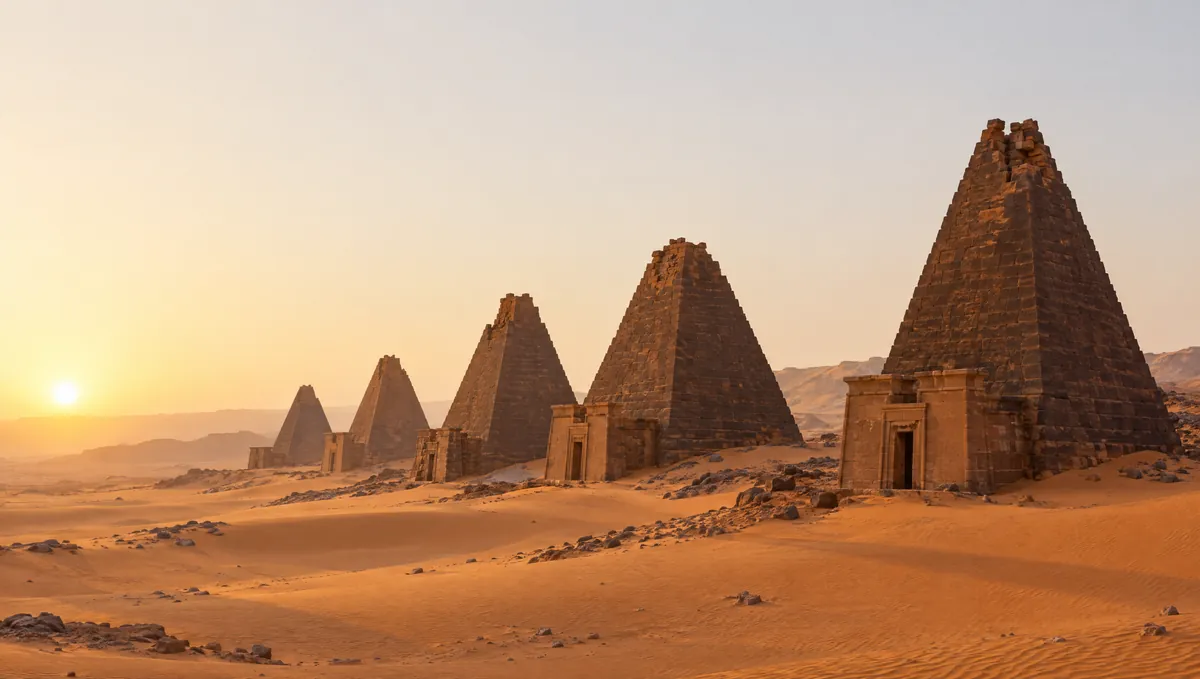
Meroë was the royal city of the Kingdom of Kush, a Nubian civilisation that ruled the Nile Valley south of Egypt from about 800 BCE to 350 CE. It stood on the east bank of the Nile, about 200 kilometres north-east of today's Khartoum, on the trade routes between Egypt, the Red Sea and the lands to the south.
Its goldsmiths were among the finest of the ancient world. Its script, Meroitic, is still only partly read. And for centuries its rulers included queens, whose names are carved on the steep pyramids of Begrawiya, the royal cemetery that still stands at the edge of the desert.
The house takes its name from this city because it wanted a root, not an inspiration. Every piece traces back to it: its temples, its colours, the gold its queens wore.
- Kingdom of Kush
- c. 800 BCE – 350 CE
- Royal city
- Meroë, on the Nile in today's Sudan
- Royal cemetery
- Begrawiya, more than 200 pyramids
- UNESCO World Heritage
- Island of Meroë, since 2011
The Kandakes
Kandake was the title of the queens of Kush. Some ruled alone; others ruled beside the king with equal authority.
Amanirenas led Kush against the armies of Rome at the end of the first century BCE. Amanitore, with King Natakamani, raised the Lion Temple and the Temple of Amun at Naqa. Amanishakheto was buried with a hoard of gold jewellery set with coloured glass and stone, held today in museums in Munich and Berlin.
Their names stay with the house. MERO is made, first, for the woman who chooses her own pieces.
The lotus that crowns the column
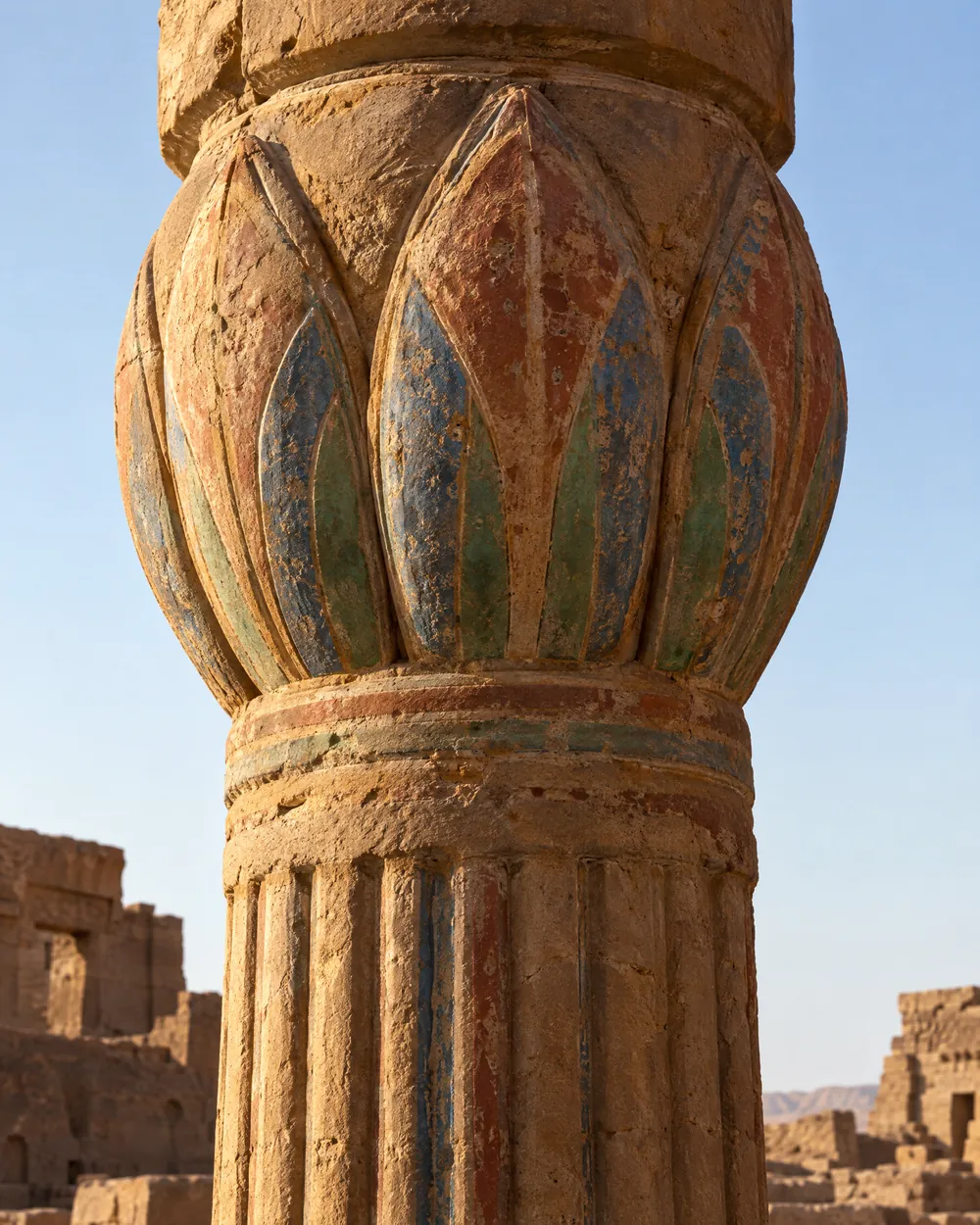
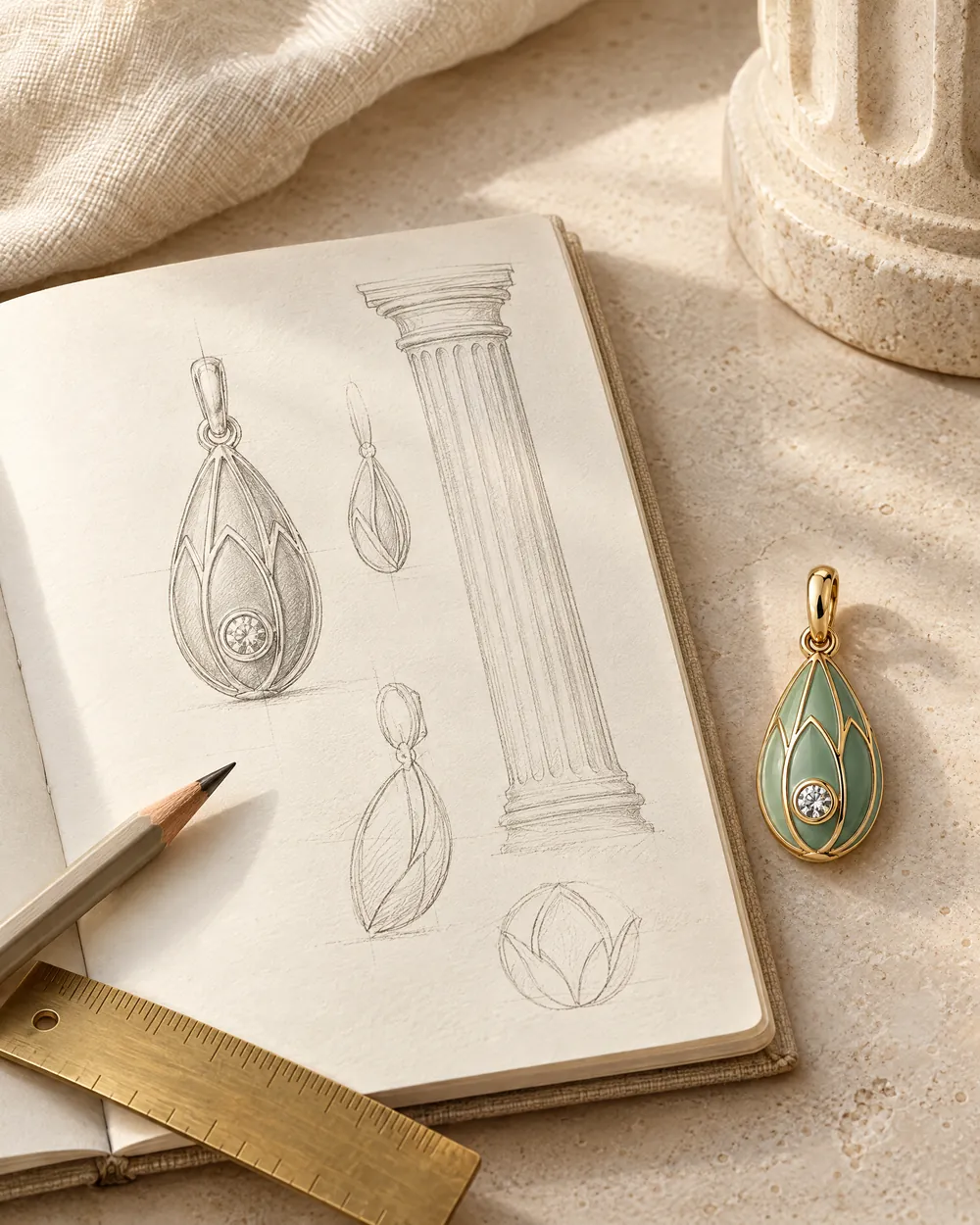
At Naqa, south of Meroë, the temples of the Kushite kings and queens stand at the foot of a low mountain. Their columns rise to lotus capitals: the flower of the Nile, carved at the top of the shaft.
That meeting of the straight column and the curving flower is MERO's signature, and it runs through the collection. Sabr is the lotus as a closed bud, the moment before it opens. Nur is the same flower fully open. The Taj ring wears it as a crown.
Colour, set in gold
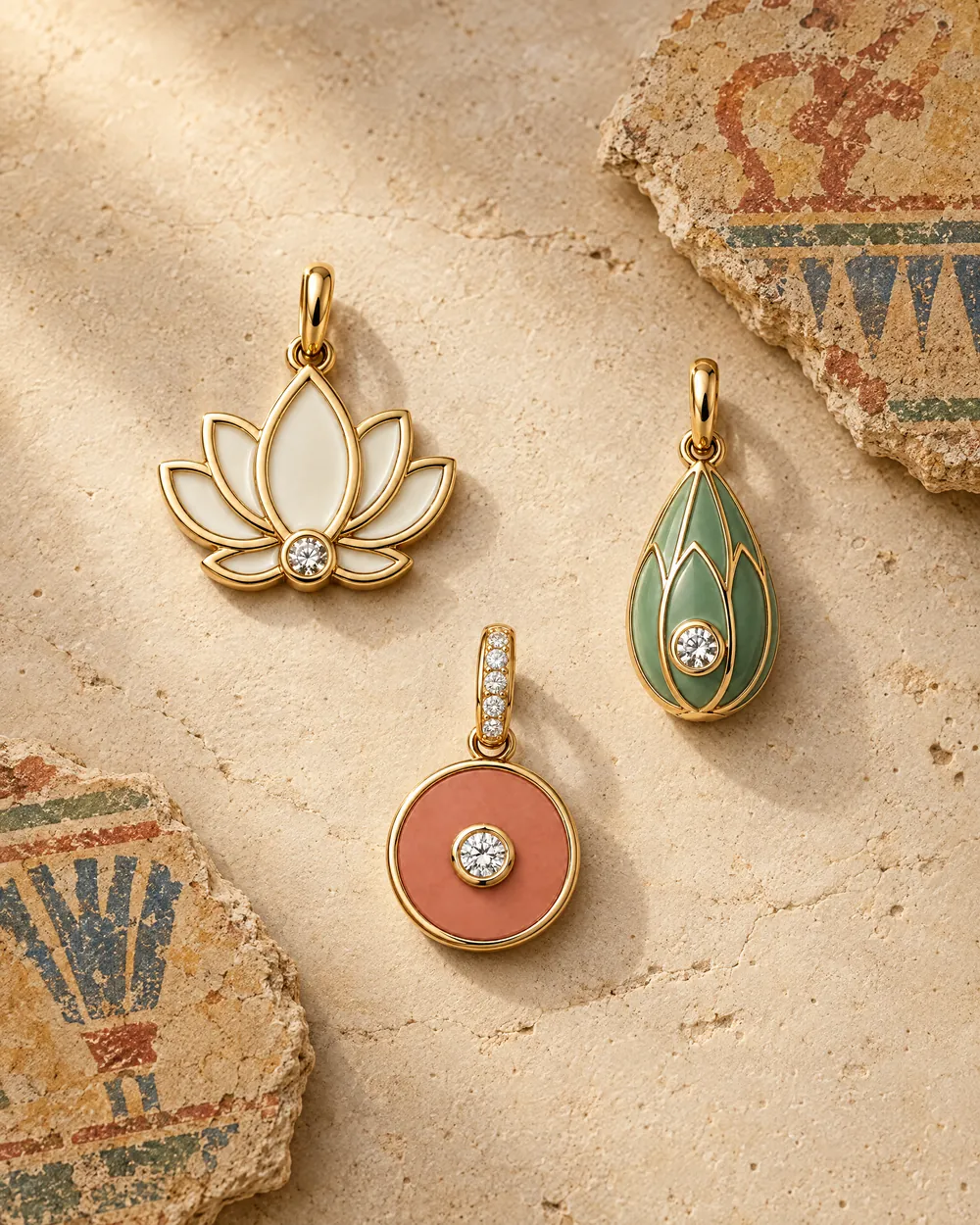
The temples of Meroë were painted, not the bare stone they are today. The jewellery buried with Amanishakheto set coloured glass and stone in separate fields of gold.
MERO uses colour the same way: one or two fields of colour, each held in gold, never scattered. The colours come from that world. Terracotta for carnelian. Nile Blue for lapis and the blue glass of the queens' jewellery. Malachite green and sage for the green stones of the Nile Valley. Ivory and white, and gold itself. In the collection they are enamel fired into the gold, or stones set in it.
The founder
I never studied jewellery. I studied psychology. But the instinct to make things — to arrange them, to refine them, to ask whether an object could look more like itself — was present long before I had words for it.
Shaza grew up in Omdurman, in a household where gold is given, kept and passed from mother to daughter. She was eight or nine when her mother placed a gold guinea in her hand at a family gathering. It was, she says, where she learned the language gold speaks in Sudanese homes: not ornament, but record.
Her first piece came in the early 2000s. Nothing in the market suited the traditional Sudanese dress she wanted to wear, so she bought fine Indian chains, cut them and reshaped them until they sat as Sudanese gold sits. For twenty years she designed only for herself, and at every gathering women asked where her pieces came from.
In Dubai she walked the gold souk week after week and found fine craft but little new design. MERO is her answer: heritage from one source, refinement from another, for women who want a piece no one else has.
Heritage does not have to feel like a costume. In MERO, I want it to be the most modern thing she wears.
Made in Dubai
Every MERO piece is made in Dubai, in 18-karat gold. Most are made for you, after you order.